The pathway from a tenant to lord----The Tenant of the Cross
Introduction:
A tenant is essentially a renter who pays to use someone else's property. The relationship between a tenant and a landlord is defined by a lease agreement, which outlines the rights and responsibilities of both parties. The lease agreement could vary through different parts of Europe. For example, in England, leasing of manorial lands became more common, though direct management also played a significant role. In Eastern Alpine region and Scandinavia, the majority of peasants, like what it was in England, held their land through leasehold, though the specific terms varied greatly by country and region.
The Tenant of the Cross
He was born beneath the shadow of another man’s castle, a tenant of the soil, owing harvest and homage to a distant lord whose name he seldom spoke. The fields were his life, the plow his weapon, and the rain his uncertain master. He had known no glory, only obedience — until, one winter’s night, as bells tolled through the fog, a preacher came from the cities of Chelmont, France, cloaked in dust and fervor, crying the words that would set Christendom aflame:
“Deus vult — God wills it!”
The First Crusade had been proclaimed. The Holy City had fallen to unbelievers, and the faithful were called to take up the sword of heaven. The tenant listened from the crowd, his heart trembling like a leaf in storm. He was no knight of noble birth, no son of gilded lineage — only a man of calloused hands and quiet prayers. Yet something within him stirred, a flame long sleeping. The promise was not of gold but of forgiveness, not of land but of eternal grace. And so, when the Cross was raised upon the village green, he stepped forward, knelt in the mud, and pressed it to his shoulder.
“Take up the Cross,” they said, “and your sins shall be washed away.”
He rose, no longer a tenant of earth, but a tenant of God.


He sold his plow for a spear, his ox for a horse thin as hunger. His lord granted him a rusted hauberk and a place among the levy — not as a knight, but as one who carried water and bore arms for others. Yet as the hosts gathered and banners of every color filled the fields of France, he felt himself part of something vast, something burning with purpose.
He joined the host of Godfrey of Bouillon, Duke of Lower Lorraine — a man whose strength was wrapped in humility, whose sword gleamed not for gold but for God. Under Godfrey’s banner, he marched with thousands — knights in armor, priests with relics, peasants with little more than faith. The roads eastward devoured men by the hundreds; famine, thirst, and plague marched beside them. Yet Godfrey rode at the head, a cross sewn into his mantle, his voice calm as a prayer.
The tenant, now a soldier, learned the taste of iron and dust. His feet bled, his shield cracked, his heart swayed between despair and devotion. But each night, as the campfires burned like stars upon the plains of Anatolia, he whispered psalms and remembered why he had come.
“Better to die in the light of God,” he thought,
“than to live forever in the shadow of servitude.”
They marched eastward — through the snows of the Alps, through the dust of Anatolia, through hunger and fever, battle and betrayal. At Nicaea, he saw the first blood of the infidel; at Antioch— the gate of the East, high-walled and cruel. The siege lasted months that felt like years. Hunger hollowed the eyes of the crusaders; men gnawed leather and grass, yet would not yield. Rain turned the camps into seas of mud, where knights and beggars prayed side by side.
The tenant watched good men die — some of disease, others of doubt. He too felt the edge of despair, when no food remained and the sky itself seemed to close. He wondered if God had turned His face away. But in the stillness before dawn, when the muezzin’s cry mingled with the Latin prayers, he would look toward the city’s towers and see them gilded by the morning sun. And something within him would stir — a whisper, soft but unyielding:
“Hold fast. The dawn belongs to the faithful.”
He murmured when seeing his horse died because the lack of food
“We are running from the battle
The battle that must be fought
And Still we sleep”
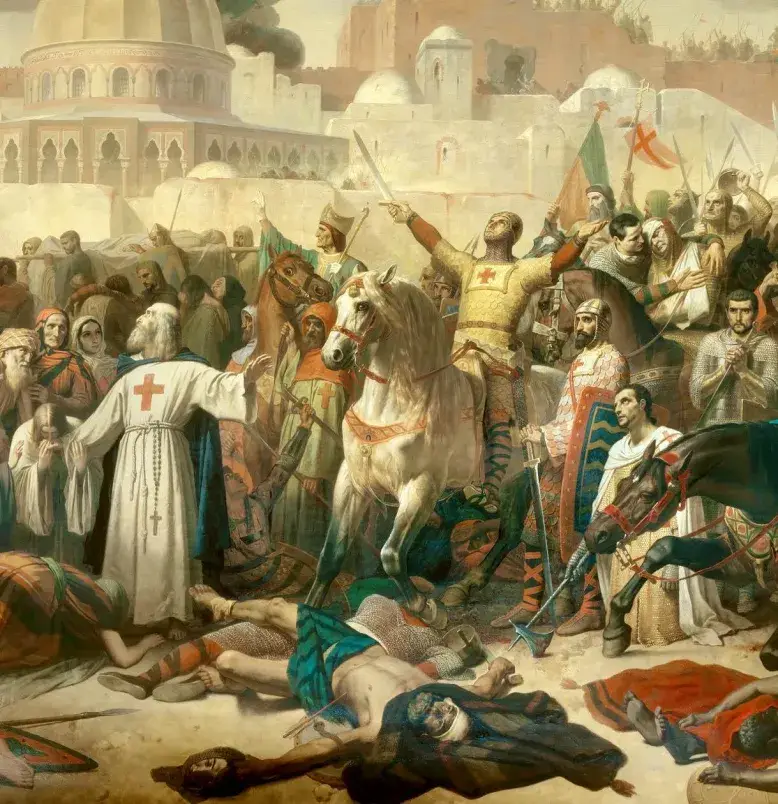
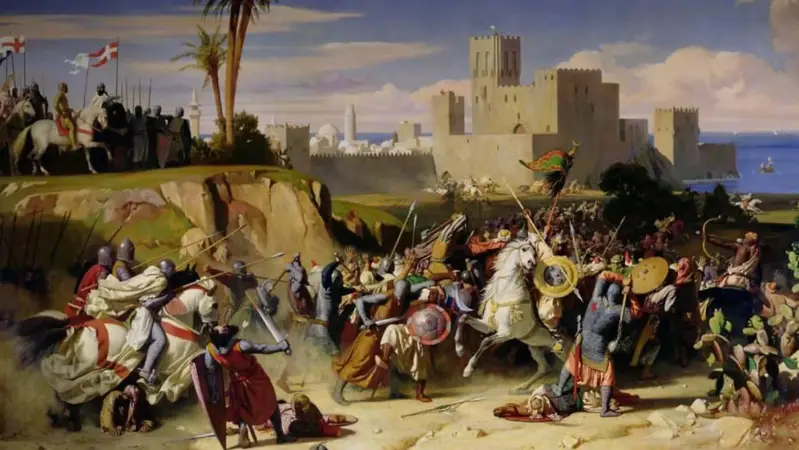
When, at last, a breach was made and the crusaders stormed the city, he fought as if every stroke were a prayer. His sword, once borrowed, was now baptized in the heat of battle. He saw his comrades fall, yet pressed on, crying Godfrey’s name. And when the banner of the cross rose upon Antioch’s walls, he wept openly — not for victory, but for belief restored.
In the following days, as the army starved even within the conquered city, rumors came that a vast Saracen host approached. Panic swept the camp, yet Godfrey stood unmoved, and his calm became a light in the storm. The tenant, still trembling from fever, took up his weapon again. “If I must die,” he said, “then let it be upon the soil I have sanctified with my blood.”

And so they fought once more — peasants and princes, shoulder to shoulder. Against all hope, the enemy fled. And in that moment, beneath the burning sky, the tenant felt what it was to be a knight — not by lineage, but by faith and fire.
“Not by birth, but by battle,” he told himself,
“does a man carve his name upon the stones of heaven.”
at Antioch, he learned what faith meant when men starved but would not yield. In the long nights of siege, when the campfires flickered like dying stars, he prayed not for life but for courage. And when the final assault came, he fought not behind another’s shield but with his own, rising from the ranks of servants to the fellowship of warriors.
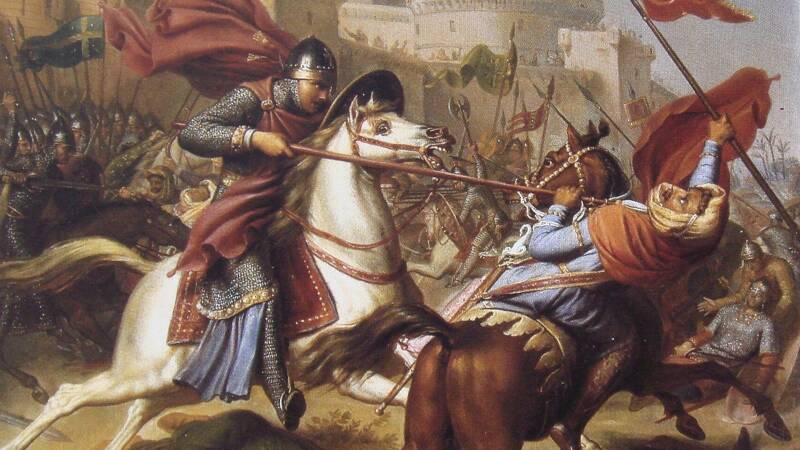
When the Crusaders at last reached Jerusalem, the city shone before them like a mirage, her walls crowned by the dawn. The march had taken three years; half of those who had left the fields of Europe lay buried beneath strange skies. But the faithful pressed on, barefoot upon sacred soil, singing psalms as arrows fell like rain. The tenant — now a knight by deed if not by title — was among the first to breach the gate. His sword, once dull with rust, gleamed with divine fire. The siege was fierce and terrible. He scaled the walls with Godfrey’s men, his arms trembling but his soul alight. Arrows rained down, the stones burned, and yet the cross rose higher. When the city fell, he entered barefoot, walking through tears and ashes, until he reached the Church of the Holy Sepulchre. There he knelt, his sword laid across the altar, and whispered,
“Jerusalem,” he whispered, “I am unworthy, yet I am redeemed.”
On the morning of July 15, 1099, he stood within the Holy City, his hands trembling as the bells of the Sepulchre rang across the hills. Tears stained his armor. He had fought, he had bled, and he had taken back the Promise of God.
“Lord, I came as nothing. I return as Yours.”
For months he remained in the East, a soldier of Christ under the banner of the Cross. The Crusade had changed him: the peasant was gone, replaced by a man tempered in both battle and belief. But when the tides of war receded and peace, however fragile, settled upon the holy lands, he longed for the green hills of home. And so he returned — no longer a tenant, but a pilgrim marked by heaven.
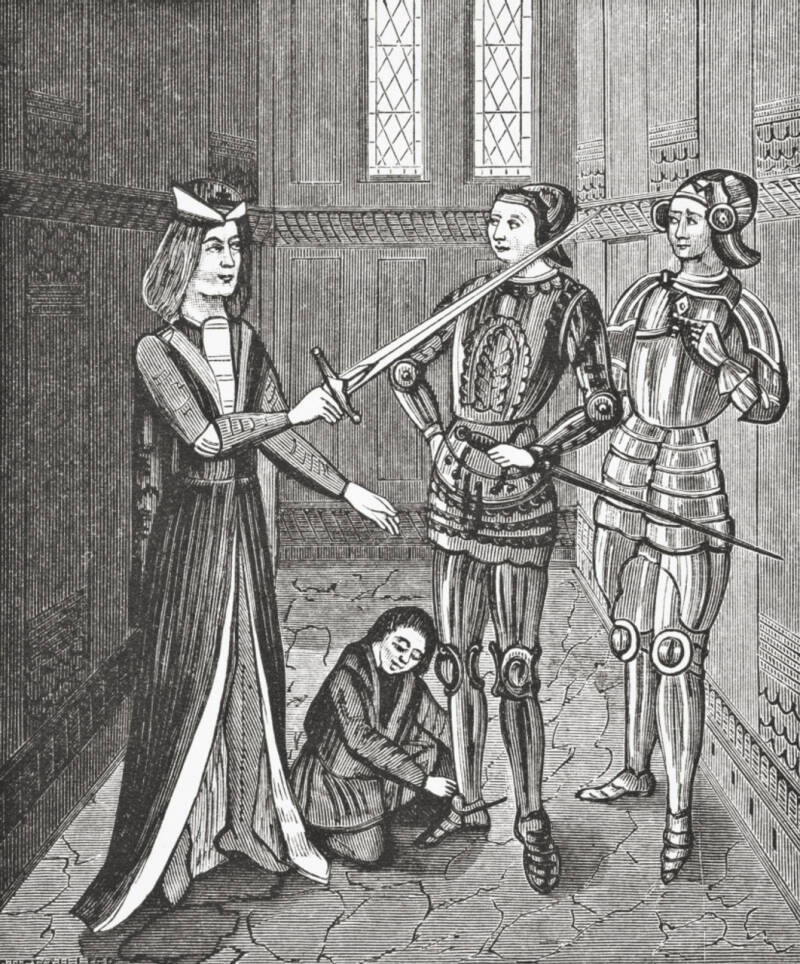
When he rode into his village, the people scarcely knew him. His armor bore the scars of a hundred wounds; his eyes, the quiet fire of one who had seen Jerusalem at dawn. Word spread quickly — how he had fought beneath Godfrey of Bouillon, how he had carried the Cross across continents, how he had helped reclaim the Holy City. His lord summoned him to the hall, where torches burned like small suns.
“You went forth as my tenant,” the lord said, “and returned as my equal.”
He was granted a parcel of land, small yet sovereign, upon which to build his hall. There, in the valley where he had once labored in another’s field, he raised his own banner — a simple white cross upon crimson cloth. And though his title was modest, his name carried the weight of faith and valor.
“For he who fought for God,” the chroniclers wrote, “earned a crown no man could deny.”
In the years that followed, pilgrims sought his counsel, and young squires listened to his tales beneath the oaken rafters. He spoke not of conquest, but of sacrifice — of the price of glory and the mercy of redemption. He taught that knighthood was not born in bloodlines but in belief, that the truest lordship was not dominion over land, but over one’s own soul.
When at last his days waned and his sword lay quiet beside him, he asked to be buried beneath the chapel he had built — the chapel whose altar faced east, toward Jerusalem. There, in stone and silence, he slept, not as a peasant nor a lord, but as what he had always been:
a soldier of God, a knight of the Cross, and a lord of faith.
“In earth he toiled, in heaven he rose;
His plow became a sword, his prayer a crown.”