The Voice of Memory: The Bard as the Heart of Medieval Culture
In the dim light of a mead-hall, beneath the timbered rafters darkened by the smoke of years, a figure stood—harp in hand, words trembling like firelight on the lips. The bard, that sacred vessel of memory, was not merely a singer but a keeper of the soul of an age. Under the glorious flags of crusade armies, bards sang along with irony and honor. Before the scribe’s ink had hardened into history, before parchment held the deeds of kings, bard was making the fleeting deeds eternal. Medieval culture, bounded together by fealty, faith, and fragile peace, owed much of its unity to those who sang its stories. In a world where few could read other than noblemen, it was through the measured cadence of oral recitation that virtue, lineage, and valor were remembered and renewed. The bard’s song was the heartbeat of collective identity, echoing from Celtic Hillforts to the courts of Norman lords.
Among the Celtic peoples, the bard’s piece was not an art but an order. The Irish filid and the Welsh beirdd were ranked in intricate hierarchies, their learning formal and rigorous. They were historians, moral philosophers, and political emissaries—poets in whom truth and song were fused. To attain the rank of ollamh, the highest bardic degree, one might study for twelve years, mastering an art both divine and dangerous. Their verses could immortalize a king—or ruin him. Anecdotes abound of the Irish kings who feared more the satire of a bard than the sword of an enemy, for a biting verse might turn public honor into ridicule. So powerful was the bardic word that even in law it was bound by consequence; a false praise or an unjust reproach could incur fines and forfeiture. In a world sub-kings or even kings were somewhat illiterate, bardshood played a vital part in both oral traditions and historical writing.


In the ancient courts of Tara and Dyfed, the bard’s voice shaped not only memory but moral order. Their songs were not mere celebrations of conquest but meditations on justice and honor. When Taliesin—half legend, half man—sang in the sixth century for Urien of Rheged, his words lifted the deeds of a northern warlord into the realm of myth. “I have been many things,” he declared, “a sword, a tear, a star…” His voice transcended time, transforming tribal strife into cosmic drama. Through figures like Taliesin, one sees the bard not as chronicler but as interpreter, a loyal Gospel preacher, giving symbolic meaning to the struggles of men and nations. The oral tradition thus became not a chain of repetition but a living organism, growing, adapting, and carrying forward the wisdom of generations.
Bards wandered throughout Europe, one can be in castles in the forest of Austria and listen to the voice of ancient Celtic legend. They spread not only legend, but also hope and legacy from a faraway nation, they praise true believers and redemn the tyranny, they told the honor story of crusades, how they overcame storms in west Asia and conquered enemies that were dozens of times stronger than themselves, they told the story of how King Arthur summon his knights to defend Britain, and they told the story of Godefroy de Bouillon, about how he bravely fought in the siege of Jerusalem by the honor of God.
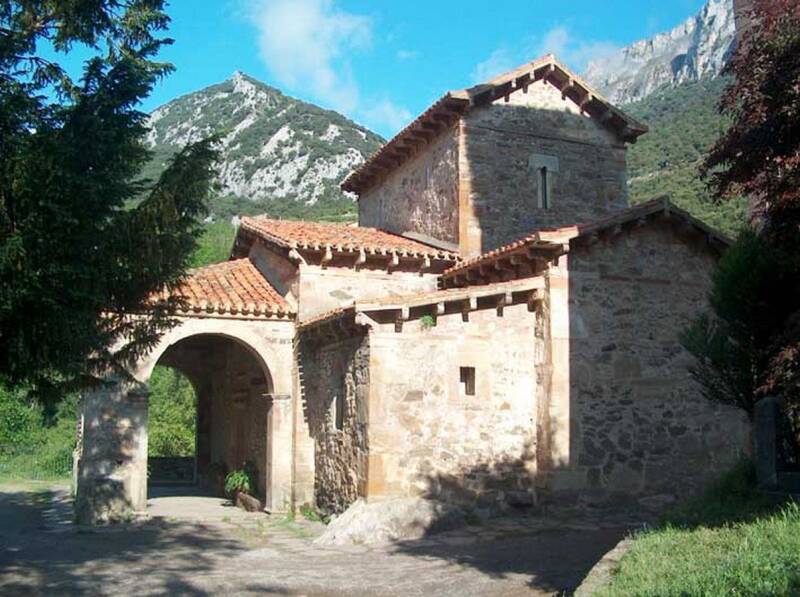
They owned nothing but an heroic heart and upright character, they dared to defend the poor for their rights with the strong. When they saw people struggling for the Black Death, they will soothe the patients with calm poems without wearing masks of Plague doctors, they will stand in front of the tenants and hold forth with vehement conviction.
When we speak of medieval culture, we often imagine cathedrals and cloisters, yet it was the bard’s art—fluid, portable, and human—that reached further into the hearts of the people. The songs carried news across mountains, bound scattered clans in shared remembrance, and offered the illiterate a mirror of themselves in sound and story. If the cathedral was a monument to divine permanence, the bard’s song was a monument to human endurance. The harmony of voice and harp was, in a sense, the first architecture of faith among men who lived by memory.
The Weavers of Oral Tradition: Bards and the Breath of the People
The medieval bard did not belong only to kings. His truest dwelling was among the people—at fairs, on moors, in villages that smelled of peat and rain. There, beneath skies heavy with cloud, he wove the fabric of oral tradition, thread by thread, word by word. His verses were not kept in the vaults of monasteries but in the air itself, carried from ear to ear, heart to heart. In the echo of his songs lay the continuity of communities too fragile for stone yet too proud to vanish.
Long before written chronicles shaped the canon of Europe’s history, oral tradition functioned as the continent’s hidden bloodstream. Through the songs of bards, the deeds of ancestors were preserved not as rigid fact but as living truth. Consider the Chansons de geste—the “songs of deeds”—that filled France with echoes of Roland’s horn at Roncevaux Pass. Though the Song of Roland was later transcribed, it began as an oral performance, evolving through countless mouths before the poet Turold set it to parchment. The bardic predecessors of that epic carried within their melody not mere entertainment but the moral essence of knighthood: courage, loyalty, sacrifice. When Charlemagne wept for his fallen nephew in those verses, medieval listeners felt not just grief but instruction. To sing of heroes was to teach the art of living honorably.


Likewise, in the Celtic west, bards safeguarded genealogies with a precision unmatched by clerks. Every noble family desired a bard, for through him their lineage gained legitimacy. Yet the bard’s fidelity was not merely political—it was spiritual. Each retelling, each rhythmic cadence, renewed the invisible bond between past and present. Oral tradition was not static memory but a form of reincarnation. Through the bard’s breath, the dead lived again. The tale of Cú Chulainn, the Hound of Ulster, did not endure for centuries because it was written early, but because it was sung faithfully. The story was a ritual of national consciousness, a performance of identity.
Even outside the Celtic and French worlds, echoes of bardic influence rippled across Europe. In the Germanic north, the scops of Anglo-Saxon England and the skalds of Norse courts served similar roles, though their verse was sterner, carved with the cold clarity of fjords and iron. The Icelandic skalds, in particular, fused the bardic function with historical record. Snorri Sturluson, the 13th-century Icelandic poet and historian, preserved in his Prose Edda not only mythic lore but the rules of the poetic craft itself. In this sense, Snorri was both a preserver and a reformer—a bard turned archivist, ensuring that oral song would survive in the new medium of the written page.
The written word, though permanent, lacks the shimmer of immediacy that the oral bard commanded. His art depended on presence: the timbre of voice, the pulse of silence between lines, the communion between singer and listener. To hear a bard was to participate in the making of history, not merely to receive it. Each performance varied subtly, as memory and moment intertwined. The medieval audience did not demand textual fidelity but emotional truth. Through this living art, the oral tradition breathed, sang, and endured long after parchment had yellowed.
Echoes of the Sacred: Bards and the Spiritual Imagination
In the tapestry of medieval life, where faith governed both the plough and the sword, the bard’s song also carried the resonance of the sacred. Religion and myth were not separate worlds but overlapping veils, and the bard’s voice could pierce them both. He was, in a sense, the prophet of the ordinary—translating divine mystery into melody. Before the Reformation turned the Word into printed text, it was the bard’s word, sung and spoken, that bridged heaven and earth.
Among Celtic Christians, bards often intertwined pagan symbols with Christian revelation. The medieval Welsh poets, heirs to Druidic tradition, continued to use nature as sacred metaphor. When the twelfth-century bard Meilyr Brydydd praised his lord as “the oak of battle” and “the sea’s thunder,” he drew upon an ancient lexicon of holiness embedded in the natural world. The bardic imagination saw no contradiction between God and the grove; both were sources of awe. This synthesis preserved older cosmologies under the cloak of new faith, ensuring that conversion did not erase but rather transfigured tradition.


In the courts of Brittany and Occitania, the bardic spirit found another metamorphosis: the troubadours. Though not bards in the strict Celtic sense, they inherited the same reverence for the spoken word as vessel of truth. Their songs of fin’amor, or refined love, were moral allegories as much as romantic laments. Figures like Bernart de Ventadorn and Arnaut Daniel shaped the medieval understanding of emotion, language, and virtue. They transformed private longing into public art, revealing how deeply the bardic impulse—song as moral revelation—had penetrated the consciousness of Europe. The troubadours’ influence spread northward, inspiring the Minnesänger of Germany and even echoing in Dante’s Tuscan verse. Thus, the bard’s legacy was not confined by geography; it was the bloodstream of medieval poetics itself. The blending of bardic and clerical traditions is most vividly embodied in the figure of the Venerable Bede. Though not a bard by title, Bede’s Historia Ecclesiastica Gentis Anglorum owes much to the oral transmission of early English song. He recounts, with reverent awe, the story of Cædmon—the illiterate herdsman who, by divine vision, received the gift of song and became the first English Christian poet. In Cædmon’s tale, one perceives the fusion of the sacred and the bardic: a moment when inspiration descends not through scholarship but through the music of faith. The idea that poetry could be revelation rather than composition harks back to the bard’s ancient role as seer.
The bard’s relationship to the divine was not confined to Christianity alone. In the Norse sagas, the skalds invoked the god Bragi, patron of poetry, whose tongue bore runes of wisdom. To speak in verse was thus to partake in divine creation. In both pagan and Christian cosmologies, the spoken word was a generative force—an echo of the original “Fiat lux.” The medieval bard, by giving voice to the ineffable, stood as mediator between the mortal and the eternal. His harp was his altar; his memory, his scripture.
The Shaping of History: The Bard’s Legacy in Local Memory
If kings ruled by sword and scribe, the bard ruled by memory. His dominion was not vast in land, but infinite in time. Through him, local histories—the lives of farmers, fishermen, and forgotten heroes—entered the grand narrative of nations. When the chroniclers of England and France wrote their annals, they often drew, consciously or not, upon the oral foundations the bards had laid. What had once been sung in firelit halls became the scaffolding of written history.
Consider the survival of Scottish and Irish clan identities. Even into the late Middle Ages, long after literacy spread, the genealogical bards persisted. At clan gatherings, they would recite lineages stretching back to mythical ancestors. One seventeenth-century Irish chronicler, Lughaidh Ó Cléirigh, records that when a chief died, the bard was summoned to “wake” the lineage—to sing the names of all forefathers until dawn. In such rituals, time itself became a circle; the past was not behind but within. This sense of continuity was a form of historical consciousness more profound than any chronicle.

The bard’s influence extended beyond the Gaelic world. In Wales, the poetic contests known as Eisteddfodau—traced to the reign of Lord Rhys ap Gruffydd in the twelfth century—enshrined the bardic craft as a national institution. Poets gathered to compete in meter, metaphor, and memory, their art celebrated as a civic duty. Through such gatherings, local identity was reforged into cultural unity. The Eisteddfod tradition, astonishingly, endures to this day, a living testament to the medieval bardic heritage.
Even in regions far removed from Celtic influence, the bardic spirit reemerged whenever the written word proved too distant for the common tongue. In the Italian hill towns, wandering giullari recited epics of Charlemagne in marketplaces. In the Balkans, oral singers preserved the memory of medieval battles long after the empires that fought them had vanished. The continuity between medieval bards and modern folk singers is not merely aesthetic but ontological: both serve the same sacred function—to give the people their own story.
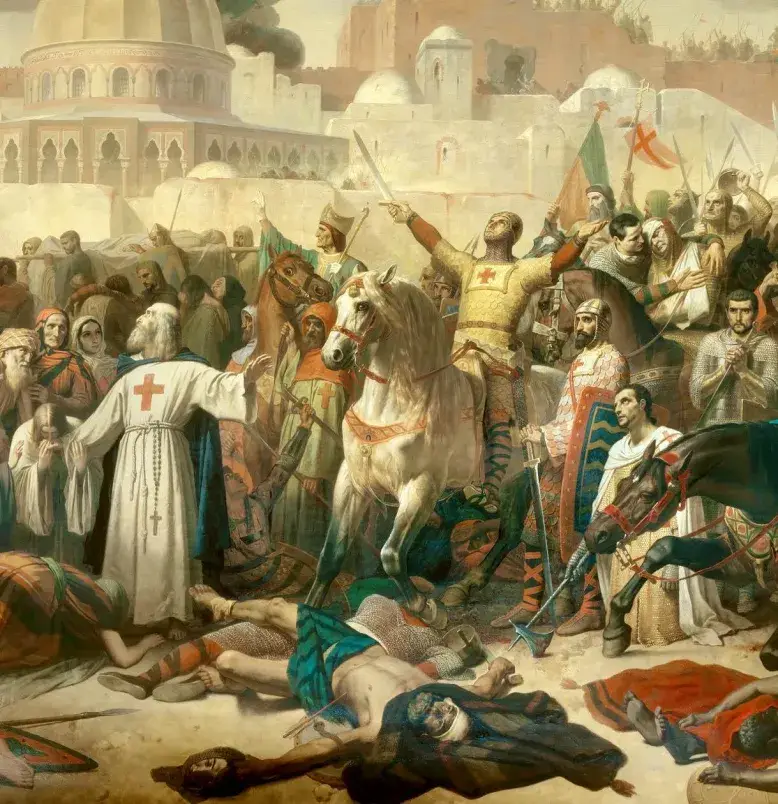

One might say the bard was the first historian of feeling. Chronicles record events; bards recorded meaning. When Turlough O’Carolan, the blind Irish harper of the eighteenth century, composed elegies for fallen patrons, he was not merely preserving names but the aura of an age fading into silence. Though centuries after the medieval zenith, O’Carolan’s music was the twilight echo of the bardic order—a reminder that history lives longest when sung.
Through the bards, medieval culture achieved a paradoxical immortality. Theirs was an art meant to vanish in the air, yet it endures more vividly than stone. The bard’s legacy lies not only in literature but in the very rhythm of Western memory: in the cadence of national anthems, in the narrative pulse of epic novels, in the enduring human need to transform experience into story.
The medieval world was a symphony of voices—monks illuminating texts, lords issuing decrees, peasants chanting work songs. Yet amid them all, the bard’s voice remains the most haunting, for it speaks not to the intellect alone but to the soul’s deep hunger for remembrance. The bard did not merely tell the past; he sang it into being. And in that act, he gave Europe something greater than culture: he gave it continuity.
In the end, when the castles have crumbled and manuscripts faded, the bard’s influence still lingers—in the way we narrate, the way we remember, the way we find meaning in sound. His harp may be silent, but his echo endures in every story that survives the silence of time. For it was the bard who first taught humanity that memory itself is an art—and that through the spoken word, mortal life may outlast mortality.